Drug Distribution Lawyer in Yorkville
Defense for Delivery & Possession With Intent to Deliver Charges in Kendall County
Illinois treats drug distribution, delivery, and possession with intent to deliver among the most serious drug offense categories on the books. Penalties scale sharply by substance type and quantity, and a conviction often carries mandatory prison time with no path to probation. If you’re facing one of these charges, who handles your defense matters as much as how the defense is built.
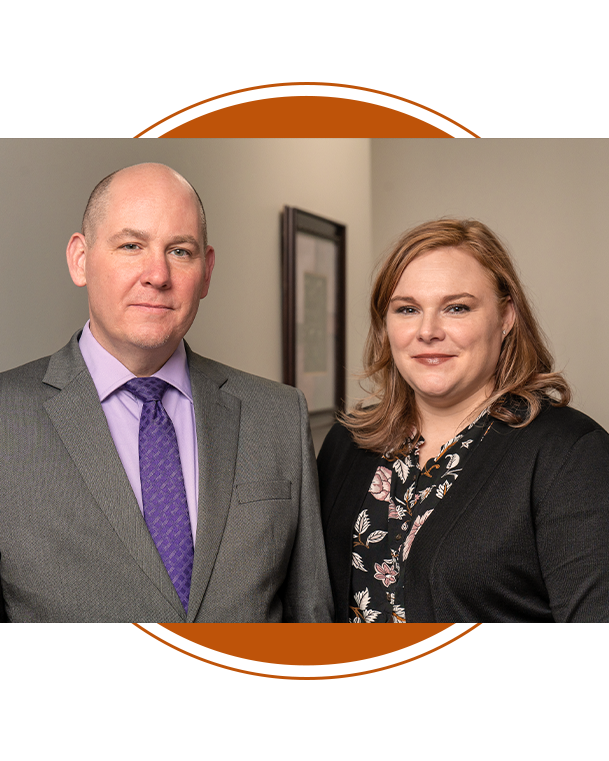
At The Nickel Law Group, LLC, attorneys Andrew and Hope Nickel personally lead every case from intake through resolution. We’re a family-run firm based in Yorkville, and we don’t hand client matters off to associates. When you call us about a distribution charge, you’re working directly with the attorneys who can appear in court with you.
Call us at (630) 553-7111 or reach us through the contact form to schedule a free consultation about your delivery or distribution charge.
What Illinois Law Means by “Drug Distribution”
The Illinois Controlled Substances Act (720 ILCS 570) makes it unlawful to manufacture, deliver, or possess with intent to deliver a controlled or counterfeit substance. Under the statute, “delivery” means the actual or attempted transfer of a controlled substance to another person, whether or not money changes hands. That broad definition means a completed sale, a hand-to-hand exchange, or even an attempted transfer can all support a charge.
Prosecutors don’t always need a witnessed transaction to bring these charges. Distribution cases are frequently built on a controlled buy involving a confidential informant or undercover officer, or on circumstantial evidence: packaging materials, digital scales, large amounts of cash, and the absence of personal use paraphernalia. Each of those elements is something we examine closely.
Drug trafficking is a separate and more severe charge under Illinois law. It generally involves bringing a controlled substance into the state or manufacturing it within the state for sale, and it can carry penalties significantly greater than those for an equivalent distribution offense. If your charge is trafficking rather than distribution, the exposure is different and the defense strategy shifts accordingly.
Illinois Felony Classes & Sentencing Ranges
The felony class and sentence length depend on the type of controlled substance and the amount involved. Delivery of, or possession with intent to deliver, heroin, fentanyl, cocaine, morphine, or LSD can carry Class X felony exposure, among the most serious non-murder felony classifications in Illinois. Class X carries no possibility of probation.
For heroin specifically, sentencing ranges by weight break down as follows:
- 1 to 14 grams: Class 1 felony, 4 to 15 years, fines up to $250,000
- 15 to 99 grams: Class X felony, 6 to 30 years
- 100 to 399 grams: Class X felony, 9 to 40 years
- 400 to 899 grams: Class X felony, 12 to 50 years
- 900 grams or more: Class X felony, 15 to 60 years
Courts in delivery cases involving specified quantities may also impose substantial fines tied to the amount and street value of the substance. Lower quantities of other Schedule I or II substances, such as amphetamine or barbituric acid, can fall under Class 1 felony penalties. These ranges make early, thorough legal analysis critical.
Sentencing Enhancements That Can Increase Your Exposure
Illinois law layers additional penalties onto distribution charges when certain facts are present. These enhancements can add years to a sentence or push a charge into a more serious felony class.
- Fentanyl involvement: Cases involving fentanyl may trigger additional sentence enhancements under Illinois law.
- Drug-free zone proximity: Sales occurring near a school, park, or religious building can trigger an enhanced penalty to the next felony class.
- Using a minor: Anyone who employs or engages a minor to deliver a controlled substance can face a substantially increased prison term for the underlying offense.
- Prior convictions: A second or subsequent distribution offense can result in increased penalties and mandatory minimum sentences ineligible for probation or conditional discharge.
How Prosecutors Build These Cases & Where Defenses Arise
Before Andrew Nickel founded this firm, he served as an Assistant State’s Attorney in Kendall County, where he handled felony matters including drug offenses. Hope Nickel spent five years as an Assistant State’s Attorney, also in Kendall County, accumulating extensive trial experience along the way. That combined time on the prosecution side means we understand how the state builds a distribution case, which directly informs how we challenge it.
Defense strategies in delivery and distribution cases typically focus on three areas. First, challenging the legality of the stop or search that produced the drugs: if law enforcement lacked probable cause or a valid warrant, a motion to suppress can be the foundation of the entire defense. Second, questioning the reliability of a confidential informant: these witnesses often carry their own legal problems, and their credibility is subject to challenge. Third, disputing whether the evidence actually establishes intent to deliver rather than personal use. Packaging alone, or cash alone, may not meet that standard.
Why Choose The Nickel Law Group, LLC for a Distribution Charge
With over 25 years of collective legal experience and dozens of jury trials tried, we bring courtroom depth that matters in high-stakes felony cases. Distribution charges can carry mandatory prison terms, limited probation eligibility at the Class X level, and potential sentence stacking from enhancements. The margin for error is narrow, and preparation has to start early.
We keep our caseload manageable on purpose. Andrew and Hope Nickel are the attorneys who review your file, develop your strategy, and stand beside you in the courtroom. That’s our standard approach.